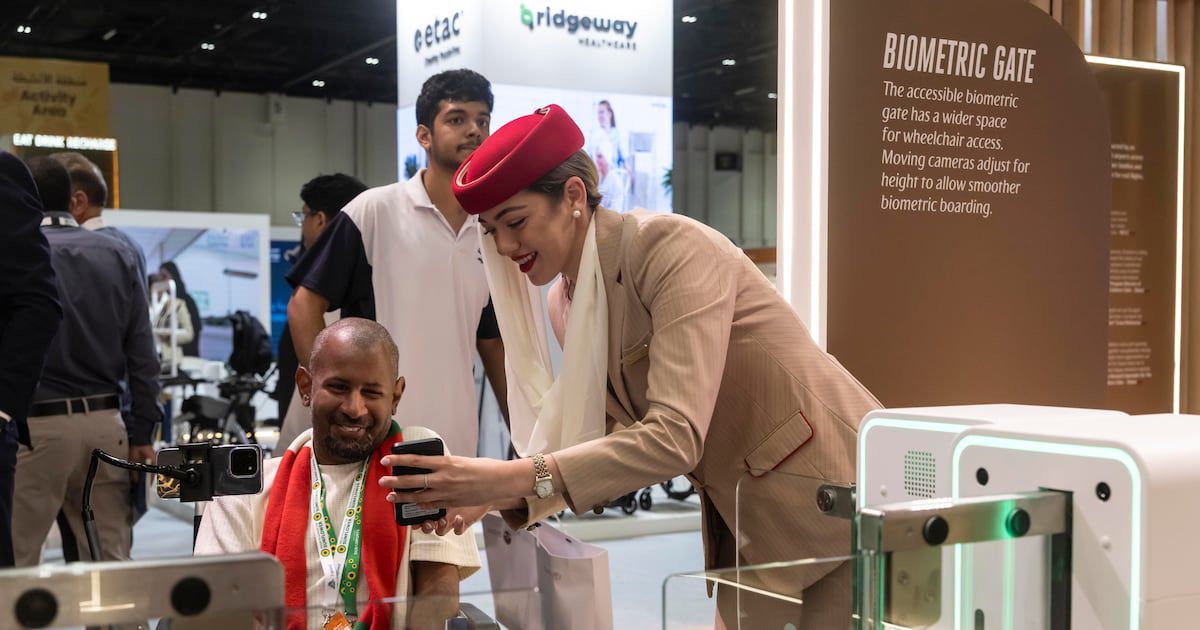
Dubai International Airport has begun trialling a self-driving wheelchair at Concourse D of Terminal 1, aiming to give passengers with disabilities a smoother, more independent journey from lounge to departure gate. Run by ground-handling firm dnata, the device uses four LIDAR sensors to navigate the terminal autonomously, while a manual override lets solo travellers take control or stop at any point along the route. If the trial succeeds, the airport plans to extend testing to Terminal 3.
Fatma Taher, head of accessibility at Dubai Airports, said the goal is for guests to move through the airport with dignity and full confidence, without the stress that large, unfamiliar spaces can bring. Suhail Amshan, a senior manager at Emirates, noted that simply entering a busy airport can feel overwhelming for some travellers, which is part of why the carrier has trained more than 30,000 front-line and cabin crew staff on supporting passengers with disabilities. Ghassan Suleiman, chief executive of the AccessAbilities Expo, added that innovation in this sector has accelerated noticeably in recent years.
Beyond the wheelchair itself, Emirates has run travel-rehearsal programmes at roughly 80 airports worldwide since 2023, helping nervous or first-time flyers get used to the airport environment before their actual trip. Dubai Airports currently offers eight dedicated services for people of determination, more than 55,000 people across 14 entities have completed accessibility training, and over 40,000 Sunflower Lanyards — the international symbol for hidden disabilities — have been distributed to travellers passing through the airport.
The push reflects a wider global trend: the assistive technology market is projected to reach $98.7 billion by 2033, while the mobility-aids segment alone is expected to hit $1.1 billion by 2031, underscoring why aviation hubs like Dubai are investing early in this space.