For years, Emirati food in the UAE lived in two places: the family majlis and the no-frills neighbourhood canteen. It did not live on tasting menus. That is changing, and the proof is on the plate — machboos rolled into arancini, thareed folded into ravioli, harees fried into croquettes.
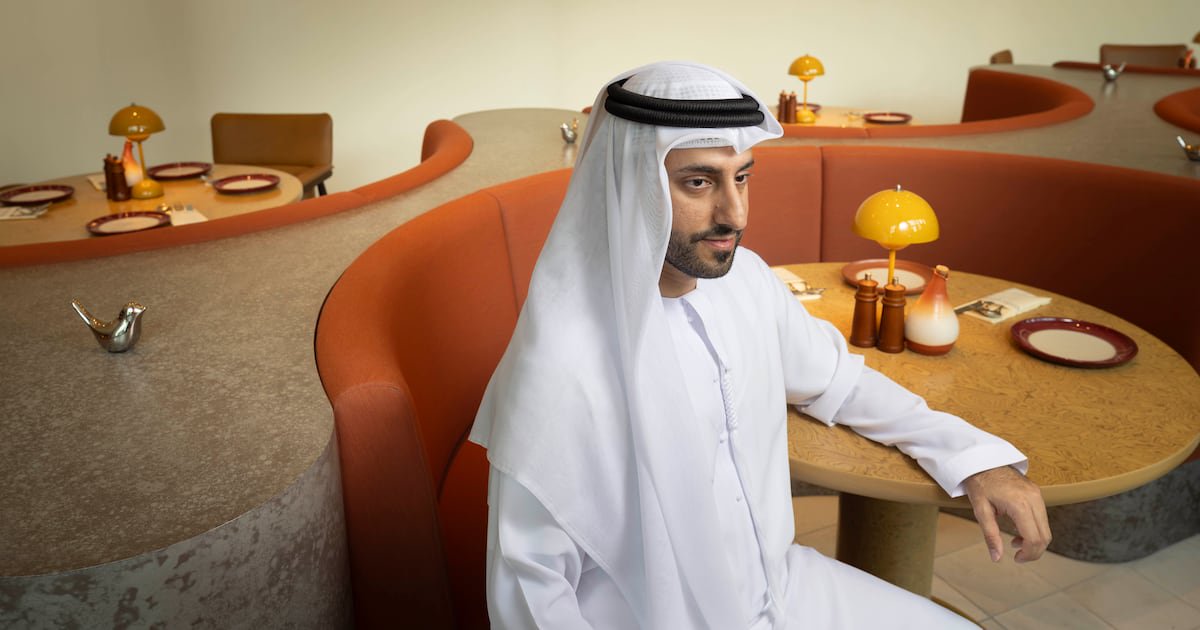
At Murmur, in Sharjah's Aljada district, founder Saeed AlGaz built the restaurant around a gap he kept noticing. Fine dining, he says, has always been associated with western, Asian or French cuisine. His menu answers that: machboos arancini, saffron lobster rolls, a San Sebastian cheesecake flavoured with karak, and a signature coconut cake, Murmur Pearl, served with sago.
Dubai's contribution is Gerbou, which holds a place on the Michelin list. Head chef Ninad Salvi serves machboos as a tart and cooks margooga with noodles and fried bread, but refuses to modernise the part that matters most: meat still goes into a traditional underground tanoor for 13 to 14 hours.
In Abu Dhabi, Erth has held a Michelin star since 2023. Chef Arivu Ravi shreds lamb stew and stuffs it into pasta to make thareed ravioli, finished with a bezar sauce. Loomi, dried lime, carries the sourness that any Emirati diner would recognise instantly. A short drive away in Al Muntazah, Jaww Spot calls its cooking neo-Emirati: harees croquettes, camel vol-au-vents, saffron kunafa prawns, chebab pancakes with house-made date syrup.
What unites all four is restraint about flavour and freedom about form. The spice blends, the dried lime, the slow-cooked meat — none of that is negotiable. The plating, the portion size and the setting are. For residents who have spent years telling visitors there is no such thing as an Emirati restaurant worth booking, the list of counter-examples is finally getting long.